
Product comparison
Comparing popular supplements for men
This page lines up the kinds of natural supplements for men that adult men ask about most, set side by side by format, ingredient focus, and how they are normally taken each day. Match a product to a routine you will actually keep. We do not rank brands, and we do not sell anything here.
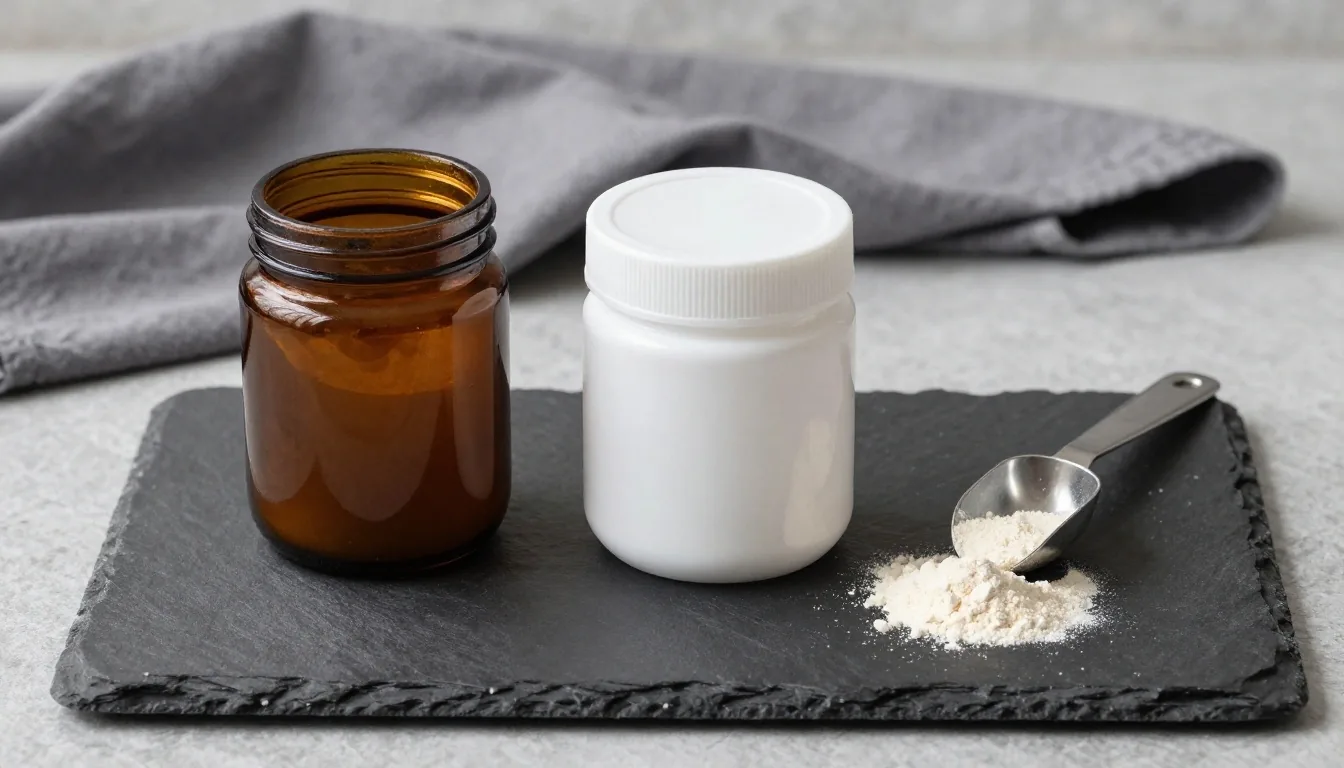
Compared by format first: capsule, tablet, powder, or one-a-day multivitamin.
Ingredient focus second, usual daily servings third.
Product fit last. Nothing is scored, ranked, or priced here.
How to read this comparison
Use the list as a filter, then open the full guide for the ingredient you care about. If a product does not state its doses, that absence is itself useful information.
Format
Capsule, tablet, powder, or one-a-day. This decides how the product fits an ordinary morning, and it is the field most people skip when they compare vitamins and minerals for men.
Ingredient focus
One broad multivitamin, a focused single such as zinc or magnesium, or a blend aimed at energy. Read what the label actually names before you read the front of the bottle.
Usual daily servings
Once or twice daily, with food or between meals. Servings per day and pack size decide whether a bottle lasts a month or quietly expires in a drawer.
Left out on purpose: price, brand reputation, and anything a label will not quantify.
Kept in: what each format asks of your day.
Five format families, read across the same four columns
Every row below answers the same questions in the same order, so you can move a finger down one column and compare like for like. The detailed notes follow underneath.
Format
Ingredient focus
Usual daily serving
Tends to suit
Capsules
Singles and small blends
Once or twice daily, with food
Carried in a bag or taken at a desk
Travel and unpredictable mornings
Tablets
Minerals and broad formulas
Once daily, with a meal
A fixed home routine
People who prefer a smaller bottle count
Powders
Larger-dose ingredients
One scoop, mixed with water
Anyone who already trains or tracks intake
Adjustable dosing at home
Multivitamin
Broad coverage
One serving a day
Someone who wants a single bottle
General coverage over one targeted gap
Focused singles
Zinc, magnesium, vitamin D
One capsule, stated dose
Fixing one gap without stacking
A routine you are willing to maintain daily
Rows describe typical products on the market, not a ranking. Brand, price, and pack size change from shelf to shelf and say little about fit.
Format
Capsules and tablets
Capsules are the most common format among natural capsules for strength and vitality that are sold to men. They are compact, easy to carry, and usually taken once or twice daily with food. Tablets can hold more mineral per unit and often cost less per serving, though some include binders and coatings that add to the swallow.
The practical difference for most people is how easy the format is to swallow and remember. If you travel often, or if your mornings start somewhere other than your own kitchen, capsules usually win on convenience. Tablets reward a fixed routine at a table you eat at every day.
Capsules
Lighter to carry, easy to take with food, usually one or two a day.
Tablets
More room for minerals per unit; check whether binders are listed.
Powders
Powders suit ingredients taken in larger amounts, such as creatine, protein, or electrolyte mixes. You control the dose and can adjust it, which is a real advantage when you are still working out how much you need.
The downsides are preparation, taste, and the need for water and a shaker at the right moment. Powders work well for people with an established routine and poorly for those who mostly take supplements on the move. Also check whether the tub states a serving size in grams — a powder that names its ingredients but not its amounts leaves you guessing the same way a capsule does.
Ask before you buy: does the label state grams per serving, or only a total blend weight?
A scoop you can adjust is only useful if you know what the scoop contains.

Larger amounts, adjustable dosing, and a shaker you have to remember to fill.
Works well when
You already have a set time and place for mixing it.
Works poorly when
Most of your days are spent away from a sink or a shaker.
Compare this field
Grams per serving, sweetener content, and scoops per container.
Format
Multivitamin-style formulas
A men's multivitamin bundles common vitamins and minerals for men into one daily serving. It is a broad, low-effort option for someone who does not want to manage several bottles, and it is the format most people picture when they search for men's vitamin supplements.
The trade-off is honest: a broad formula rarely gives a high amount of any single nutrient. If a blood test has pointed to one specific gap, a targeted product will usually serve you better. If you want general coverage and one bottle on the shelf, the bundled format is simpler to keep up with. Read the ingredient panel for forms that are easy to absorb, and check whether the serving is one tablet or three.
Good for
Covering the basics without a shelf of bottles.
Watch for
Small amounts of many nutrients, and servings that ask for three tablets.
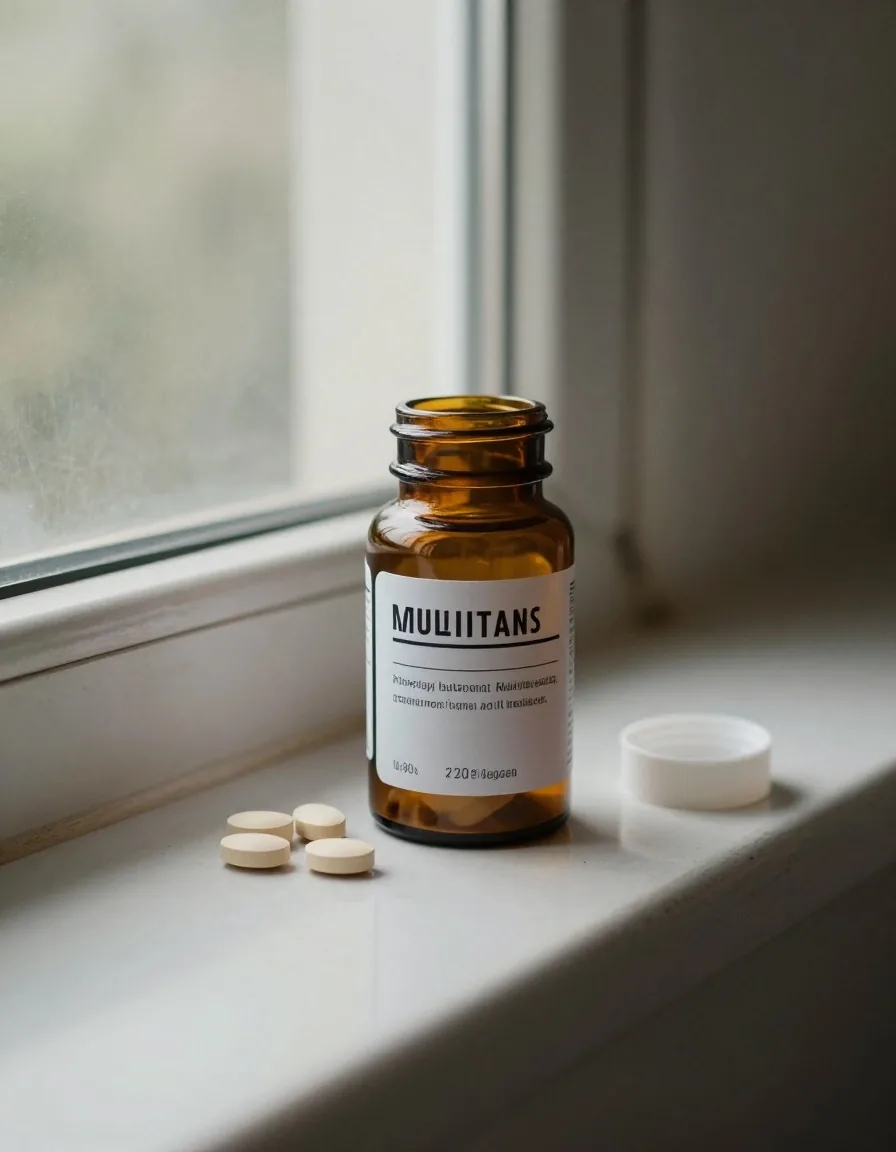
Focused singles: zinc, magnesium, vitamin D
Single-ingredient products let you control one dose precisely and avoid stacking the same mineral across several formulas.
Zinc
Commonly taken as a single capsule, often in the evening because some people find it settles better with a meal. If you already take a broad multivitamin, check its zinc line before you add another bottle.
Magnesium
Sold in several forms, and the form is usually printed on the front. The label should also state the elemental magnesium per serving, not only the total compound weight. Evening is the usual time.
Vitamin D
A small daily dose, easy to combine with any meal that contains fa. Because it is added to so many formulas, it is one of the easiest nutrients to double up on without noticing.
Keeping track
Once you take three or four singles, write the doses on one card and keep it where you take them. Fewer, larger bottles help too — it is easier to remember one purchase than four.
Singles are often the better choice once a test points to a specific gap. They are the wrong choice if you will not keep up with several bottles.
Read the panel
Energy and endurance blends
These products sit closest to energy and endurance supplements for men, and they are the hardest category to compare on this page.
Blends combine caffeine, B vitamins, and sometimes amino acids or herbal extracts. The problem is disclosure: blends frequently hide individual amounts behind one total figure, which means two products that look identical on the front can differ entirely in strength.
If the label states caffeine in milligrams, you can judge it against what you already drink. If it does not, you are guessing. This category also tends to attract the loudest promises, so slower reading pays off here more than anywhere else on the page.
Compare this
Milligrams of caffeine, total blend weight, and whether B vitamins are stated separately.
And this
Serving time. Stimulants taken late in the day can disturb sleep, which defeats the point of a routine.
Leave behind
Any blend that will not say how much of the active ingredient it contains.
Read next
Our page on energy and endurance support covers timing and everyday expectations in more detail.
Matching format to your day
Think about when you will actually take the product, not when you intend to. Breakfast at home suits a capsule or a tablet. A desk at work suits a powder only if you keep a shaker there. Evening doses are easy to forget, and stimulants taken late can disturb sleep. Pick the timing first, then the format that survives that timing — this single decision prevents most abandoned bottles.

Morning at home: capsule or tablet.
Morning at work: powder, only if a shaker lives there.
Evening: easy to miss, and the wrong time for stimulants.
Start here
Write down the time of day you eat a real meal on most days. That is your slot.
Then choose
The format that works in that slot without extra equipment or a sink.
Then check
Servings per container against that schedule, so the first bottle finishes before it expires.
What we leave out of this comparison
A shorter list is more honest about what each option does. These are the exclusions we apply, and the reason for each one.
No before-and-after claims
Photographs of change over time tell you almost nothing about how a product will behave in your week. They are excluded, along with the language that surrounds them.
No ratings we cannot verify
Star counts and review totals shift with the season and the seller. We would rather leave the field empty than fill it with a number you cannot check.
No undisclosed amounts
If a product will not state its ingredient amounts, there is nothing meaningful to compare. Those entries stay out of the list entirely.
We do not list prices either; they vary by retailer, region, and month.
This list is a filter for fit, not a shopping list.
Questions people ask before comparing
Should I compare by ingredient amount or by format first?
Format first, because it decides whether you will keep taking the product. Once a format fits your day, compare ingredient amounts within that format. A perfectly dosed capsule you stop taking after two weeks is worth less than a modest tablet you finish.
Why is price not in the table?
Prices change between retailers, cities, and months, and a cheap serving size is not cheap if you take three of them. Cost per day matters more than cost per bottle, and you can work that out from the servings line once you have chosen a format.
Can I take a multivitamin plus a focused single?
Sometimes people do, but the risk is doubling up without noticing, especially with zinc and vitamin D, which appear in many broad formulas. Read the multivitamin panel and subtract what it already contains before you add a single. If you are unsure, ask a pharmacist or your doctor.
Where does a healthy lifestyle fit into this?
A supplement sits next to food, sleep, and movement, not in place of them. Treat these as healthy lifestyle products that fill a specific gap in an otherwise ordinary routine. If the rest of the week is chaotic, fixing the routine first will do more than adding another bottle.
Do I need a test before I choose a product?
Many people start with general coverage and only look for a specific gap if something feels off. A test is what turns a guess into a decision, and it is the reason focused singles exist. Ask a qualified professional which test is worth doing for you before spending on a shelf of bottles.
These products are dietary supplements, not medicines. They are not intended to diagnose, treat, or prevent any condition. If you take prescription medication or have a health condition, speak with a qualified professional before adding anything new.
Next step
Read the guide, or ask which format fits your week
The comparison tells you what exists. The guide tells you what to look for in the ingredients. If you would rather describe your day and get a straight answer, write to us at [email protected] or call +62 22 421 1680 during working hours. We reply Monday to Friday, 09:00–18:00, from Jl. Braga No. 15, Bandung.